
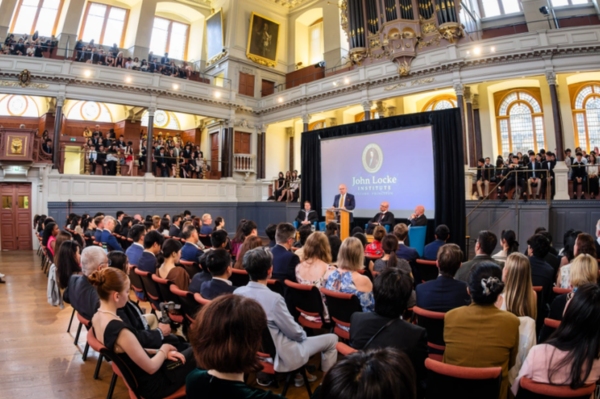
The globally renowned “ceiling of liberal arts academic competitions”—the John Locke Essay Competition—has announced via official social media that the 2026 season attracted a staggering 100,237 participants! The level of competition is unprecedented.
Random Interviews: The Biggest Variable for the 2026 Season
The review process for the 2026 John Locke Writing Competition has undergone a major change: the addition of a random online interview component!
01 Basic Interview Arrangements
- Format: Online communication
- Duration: Approximately 15 minutes
- Content: Centered on the submitted essay, requiring candidates to explain their writing process, academic viewpoints, and engage in scholarly discussion with the judges.
Although the organizers do not officially label it an “interview,” it is essentially an academic defense led by Oxford scholars. It is a critical step in determining whether a participant will win an award, particularly for top-three subject placements or a Very High Commendation.
The John Locke academic defense is fully aligned with the Oxford University undergraduate interview model. It primarily assesses academic critical thinking, logical coherence, and on-the-spot adaptability. It is absolutely not a simple “self-introduction” or “hobby Q&A.”
02 Core Defense Process (Standard 25 Minutes)
- 10-Minute Essay Presentation: Use concise language to clearly explain the research background, core thesis, argumentative logic, and innovative points. Do not simply read the essay aloud; instead, highlight your own independent thinking.
- 15-Minute Judges’ Q&A (The Most Critical Part): Judges (professors from top universities like Oxford and Princeton) will ask targeted follow-up questions, challenge your viewpoints, and explore extensions. Examples include:
- Your core argument has a flaw; how would you refute the opposing viewpoint?
- Why did you choose this research angle instead of others?
- What is the theoretical basis for a specific statement in your essay?
- If you applied a different disciplinary theory, would your conclusion change?
03 Core Assessment Criteria: It’s Not About “Being Right,” It’s About “Knowing How to Think”
The judges’ scoring focuses not on whether the “answer is correct,” but on the thinking process:
- Can you clearly defend your position without your logic collapsing?
- Can you quickly respond to challenges and demonstrate critical thinking?
- Can you step outside the essay to explore related academic questions?
- Is your language expression fluent, and does your academic literacy meet the required standards?
Key Points to Note:
- Participation is entirely voluntary. Opting out will not affect the standard review of your essay or the final award results.
- Interview time slots are booked via the official link provided in the email. If slots are full, it will not impact the standard essay review.
- Unless there are special circumstances, strong participation is highly recommended. The organizers introduced this component primarily to verify the originality and independent authorship of the essay. It may also serve as an important reference standard for award determination.
04 This Signal Deserves Attention
The John Locke Competition is evolving from a pure writing contest into a comprehensive academic ability selection system. Previously, only the quality of the essay was evaluated. Now, the assessment dimensions have expanded to include verification of originality and academic communication skills.
Get FREE John Locke Preparation Materials
Scan the QR code below to access free practice papers, study guides, and past competition materials. Start preparing today!