
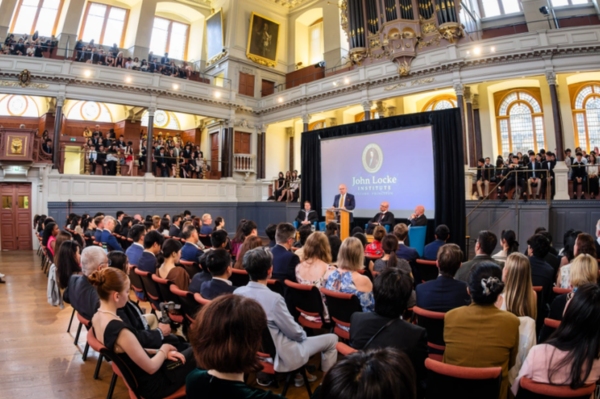
As one of the premier competitions in the global humanities and social sciences, the John Locke Essay Competition has long been recognized for its prestige and academic value. It serves not only as an excellent platform to demonstrate academic potential and enhance critical thinking, but also as a highly weighted asset for applications to top overseas universities. Consequently, it attracts countless students with a passion for academic exploration.
However, many students who are eager to participate often feel lost at the beginning of their preparation. They are unsure how to construct the logical framework of an academic paper, complete high-quality argumentation and writing, or allocate time effectively throughout the preparation process, making it difficult to form a systematic strategy. To help clarify these challenges, this guide comprehensively outlines the John Locke preparation timeline, breaks down core tasks for each stage, and helps students advance efficiently toward producing high-quality academic essays.
Competition Introduction
The John Locke Institute Essay Competition is an academic program organized by the John Locke Institute, an independent educational organization based at the University of Oxford, in collaboration with professors from prestigious universities such as Oxford, Princeton, Brown, and Buckingham. It is consistently one of the most popular competitions among students aiming for Ivy League admissions. Every summer, it attracts the most thoughtful and skilled middle and high school writers worldwide. The judging panel is composed of Oxford University professors, and past winners have been admitted to world-renowned institutions including Harvard, Yale, Princeton, Stanford, Oxford, and Cambridge.
Competition Content & Essay Requirements
The competition is divided into seven main categories: Philosophy, Politics, Economics, History, Psychology, Law, and Theology. Additionally, a Junior Category is available for students under 14 years old. The Junior Category provides 6 prompts, while each of the seven main categories offers 3 prompts. Students must select one prompt from their chosen category to write their essay.
The essay is fundamentally an argumentative paper. It primarily assesses the following competencies:
- In-depth understanding and research of the chosen topic.
- Familiarity with argumentative essay formats and requirements, including basic structure and workflow.
- Overall writing proficiency, encompassing language expression, logical structure, writing style, grammatical accuracy, and standardized formatting.
Each essay must address only one question from the selected category and must not exceed 2,000 words (excluding charts, data tables, footnotes, bibliographies, or author statements).
Competition History & Growth
The John Locke Essay Competition was first held in 2019. Its founding purpose was to inspire students’ critical thinking and cultivate them into skilled writers. The competition places a strong emphasis on independent thinking, knowledge retention, logical reasoning, critical analysis, and persuasive ability.
Initially, the competition was small and highly selective, with only around 1,500 global participants. The prompts across all disciplines were engaging, accessible, and thoughtfully designed, naturally encouraging students to express their perspectives. The original intent was never to filter for academic writing masters, but rather to use interesting, everyday questions to spark thought and encourage students to voice their opinions.
However, after gaining traction on domestic social media, the number of submissions grew exponentially:
- 2020: 2,740 submissions
- 2021: 4,000 submissions
- 2022: 6,805 submissions
- 2023: 19,104 submissions (a 6.9x increase from 2020)
- 2024: 34,823 submissions (a 12.7x increase from 2020)
The surge in applicants even led to system crashes. On June 30 at 11:59 PM (London time), the submission system was overwhelmed. Many students waited for hours with pages stuck on “pending,” switched browsers without success, and some even visited the John Locke Institute’s physical office in Oxford due to login failures.
Award Structure
Grand Prize (1 Winner): The recipient is awarded a $10,000 honor scholarship from the John Locke Institute to attend one or more of the institute’s summer school or gap year programs.
Subject Prizes (21 Winners): Each category awards one $2,000 scholarship. Additionally, each discipline features a Winner (1st Place), Second Prize, and Third Prize, with only one recipient per tier.
High Distinction & Distinction:
- High Distinction (Top 5% of shortlisted essays)
- Distinction (Top 15% of shortlisted essays)
Shortlist / Commendation (Approx. 20% Shortlist Rate): Shortlisted candidates receive either a Commendation or High Commendation. The number of shortlisted awards varies annually but typically ranges between 100 and 200 students.
Why is the John Locke Competition Highly Valued?
The John Locke Essay Competition is widely regarded as the “ceiling” of humanities and social science competitions. It is a globally recognized academic event, with its core value reflected in three dimensions: university recognition, professional rigor, and long-term skill development.
1. Core Value: A “Hard Currency” for Top University Admissions
This is the competition’s most significant value. Backed by world-leading institutions like Oxford, Princeton, and Brown, it is highly favored by top universities globally. Yale University’s admissions office has publicly referred to it as a “touchstone of humanities literacy.” Oxford University has provided exclusive summer school scholarships to winners for five consecutive years. Princeton, Stanford, and other elite schools actively look for participation in application essays. Over 30% of Oxford PPE applicants mention this competition. Shortlisting or winning is almost a “bonus weapon” for humanities and social science applicants, helping them stand out quickly in a pool of standardized test scores.
2. Supporting Value: Rigorous Review & Fierce Competition
The competition’s high recognition stems from its strict professionalism and low acceptance rate, effectively eliminating any “participation-only” reputation. The evaluation criteria are benchmarked against freshman-level college academic papers, emphasizing logic, evidence, originality, and writing standards, while rejecting jargon-heavy or formulaic answers. Competition has intensified significantly, with 2025 entries surpassing 63,000 (a 300% increase over 5 years). The global shortlist rate is only about 18.65%, lower than Harvard’s undergraduate acceptance rate. With only 21 subject prizes and a Grand Prize rate below 0.002%, shortlisting or winning is a strong validation of academic capability.
3. Long-term Value: Lifelong Empowerment of Comprehensive Skills
The value extends beyond admissions. The competition covers seven disciplines, with three new fields added for 2026: International Relations, Public Policy, and Science & Technology, bringing the total to 10 categories. It does not test rote memorization but instead trains critical thinking, logical argumentation, and academic writing. These are core competencies for university research and future careers. Winners receive substantial scholarships, attend the London awards gala, and connect with top scholars. Even without an award, the preparation process serves as a complete undergraduate-level academic training, building research experience and writing skills that lay a foundation for future academic work, essays, and interviews.
Who Should Participate?
- Students with foundational writing skills seeking improvement: The competition requires academic and structured essays, making it an excellent practice opportunity for those with a writing base who want to advance further.
- Students interested in humanities and social sciences: The prompts focus on humanities and societal issues, making it an ideal choice for those passionate about history, philosophy, economics, and related fields.
- Students aiming to strengthen critical and independent thinking: Although focused on humanities, the writing process heavily relies on logical and critical thinking, making it highly beneficial even for STEM-focused students.
- Students targeting top US high schools, Ivy League, or G5 universities: Participation not only hones writing skills but also provides powerful material and academic endorsement for elite university applications.
Rules, Process & Key Challenges
The John Locke Essay Competition is held annually. Participation is online, open to students in grades 5-12 with a writing foundation and basic IELTS/TOEFL proficiency. It is highly advantageous for applicants targeting humanities, social sciences, and economics majors.
1. Timeline & Participation Format
The competition is divided into a Junior Category (under 14) and a Senior Category (ages 15-18). Both are individual entries.
- Junior Category: Choose one prompt from 7 official options and write an argumentative essay under 2,000 words.
- Senior Category: Choose one of the 7 disciplines (Politics, Economics, History, Philosophy, Theology, Law, Psychology), select one prompt, and write an argumentative essay under 2,000 words.
2. Submission Process
Participants engage entirely online via the official John Locke website. The workflow is: Register -> Wait for prompts to be released -> Select a prompt -> Draft and polish the essay -> Submit as a PDF -> Await results. All submissions undergo three rounds of review, evaluated comprehensively on originality, formatting, quality, writing style, and persuasiveness.
3. Award Categories (Detailed)
- Grand Prize (Best Essay): 1 winner selected from all shortlisted essays across disciplines.
- Subject Prizes: Each discipline awards a Winner, Second Prize, and Third Prize (1 each).
- High Commendation: Top 1% of submissions.
- Commendation: Approximately 5% of submissions.
- Shortlist: Shortlisted but not awarded higher honors, typically under 20%.
4. Key Challenges
- Challenge 1: Broad prompts lacking a “narrow angle.” John Locke prompts are highly abstract and difficult to define, often exploring economic, philosophical, or ethical questions without standard answers. Winning essays typically choose a specific, narrow切入点 (entry point) to explore deeply and thoroughly.
- Challenge 2: Argumentation without an “evidence chain.” The competition requires anticipating and effectively rebutting opposing viewpoints. For example, a philosophy prompt asking “Is ‘justice’ objective?” requires more than stating your view; you must predict and reasonably address the strongest counterarguments. Arguments must be grounded in philosophical theories, historical cases, or empirical data, demonstrating academic rigor and critical thinking.
- Challenge 3: Conclusions that merely “repeat viewpoints.” Many students end with “In conclusion, my view is…”, which reflects a middle-school essay mindset. A strong conclusion should offer “extended thinking.” For instance, an economics essay on minimum wage could conclude by noting that while the policy reduces poverty, future research should examine how “automation replacing labor” impacts its effectiveness. This demonstrates academic continuity and research potential.
- Challenge 4: Strict word limit combined with high breadth/depth requirements. Completing concept definition, theoretical analysis, and case argumentation within 2,000 words demands extremely high information density and structural precision, requiring strong English proficiency and a solid knowledge base.
Impact on College Applications
1. Maximizing Resume Prestige
The John Locke competition is a globally influential top-tier humanities and social science writing contest. Its honors are widely recognized across mainstream US, UK, Hong Kong, and Singapore university application systems. Listed in the Common App activities and honors sections, it represents a high-level, rigorous academic background. Its value far exceeds standard school competitions or routine extracurriculars, helping students quickly stand out in a homogenized applicant pool and establish a distinct personal advantage.
2. Premium Material for Application Essays
From prompt selection and foreign literature review to logical argumentation and independent long-form academic paper creation, the entire preparation process is a complete and authentic independent academic exploration. It serves as core material for “Why Major” motivation, “Why School” fit, and personal statement narratives. It vividly demonstrates intellectual curiosity, independent research capability, and academic passion, effectively eliminating template clichés and making essays more profound and persuasive.
3. Aligning with Top University Admissions Preferences
Top 30 US universities, UK G5 institutions, and elite universities in Hong Kong and Singapore heavily prioritize critical thinking, independent research ability, and comprehensive humanities literacy. Participation and awards in John Locke precisely match the selection criteria of Ivy League and G5 schools. It serves as a highly authoritative academic endorsement that significantly boosts initial screening pass rates and overall admission competitiveness.
What Do Admissions Officers Look For?
John Locke is not about writing “beautiful essays,” but rather “thoughtful academic papers.” Through a submission, admissions officers evaluate four core competencies:
1. Critical Thinking Ability
John Locke prompts rarely have “standard answers.” Students must build their own analytical frameworks. Admissions officers are not looking for memorization skills, but rather the ability to propose original viewpoints instead of regurgitating textbook knowledge.
2. Logical Closure Construction
Students must complete a full logical chain (question -> analysis -> conclusion) within 2,000 words. Admissions officers view this as a foundational competency for future academic research.
3. Interdisciplinary Understanding
Whether writing on economics, history, or psychology, essays must integrate multiple perspectives rather than relying on single-point thinking. This “interdisciplinary analysis” is highly favored in Oxbridge interviews and Ivy League classrooms.
4. Academic English Writing Proficiency
The final goal is to “persuade” Oxford professors using academic language. This elite-level writing and expression capability directly translates into application essay competitiveness, allowing personal statements to stand out among tens of thousands of submissions.
The John Locke Essay Competition has long transcended the status of a standard contest. It is a core benchmark used by top universities to identify future thinkers. Ivy League and Oxbridge admissions officers value not just a certificate, but your ability to deconstruct complex issues, think independently, and demonstrate readiness for university-level academic writing. In today’s highly competitive and homogenized application landscape, John Locke is a rigorous asset to break through mediocrity. Starting preparation early and building academic strength will firmly secure your foundation for elite university admissions.
Get FREE John Locke Preparation Materials
Scan the QR code below to access free practice papers, study guides, and past competition materials. Start preparing today!