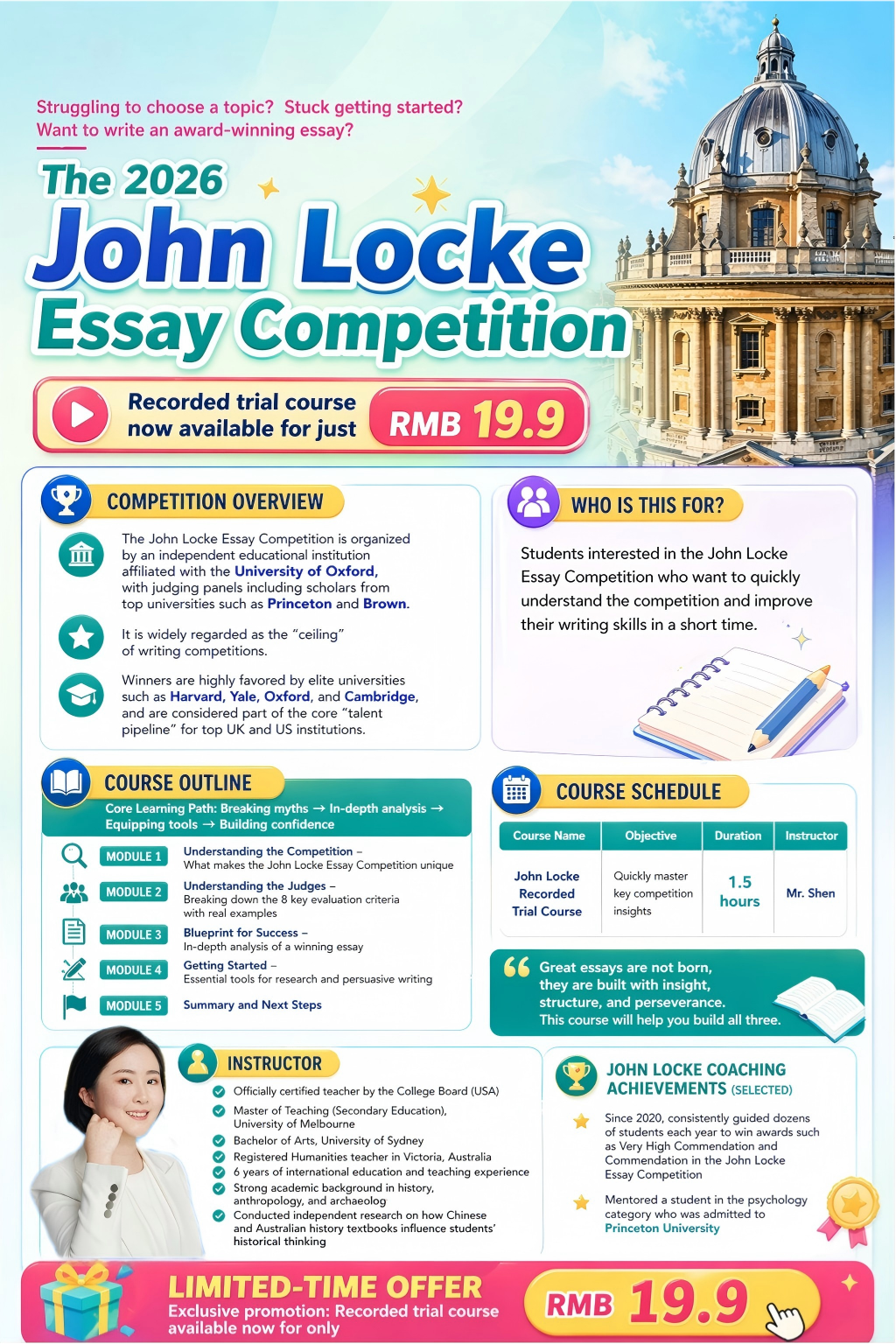

The 2026 John Locke Essay Competition philosophy questions may appear concise, but each functions like a philosophical lens, refracting some of the deepest questions in moral philosophy, the value of philosophy itself, and the rational foundations of social taboos.
They invite students into long-standing debates about moral motivation, the meaning of philosophy, and the justification of incest prohibitions.
2026 Philosophy Questions Analysis
Q1. Is it ever wrong to do the right thing for the wrong reasons?
Question: Is an action ever morally wrong if the outcome is right but the motivation is wrong?
Tutor Interpretation
This question goes directly to the heart of moral philosophy: should we evaluate actions based on outcomes or intentions?
Core Philosophical Framework
This question separates:
- External correctness (the action conforms to moral rules)
- Internal motivation (why the action was performed)
For example, saving a drowning child is the right action. But if the motive is personal fame, does that moral impurity make the action itself wrong?
Consequentialism
Utilitarian thinkers such as John Stuart Mill argue that moral evaluation should focus on consequences. If the child is saved, the action is justified regardless of motive.
Deontology
Immanuel Kant, by contrast, argues that moral value lies in duty-driven intention. Only actions performed from duty, rather than merely in accordance with duty, have genuine moral worth.
Key Philosophical Positions
Victor Tadros, in Foundations of Criminal Law, outlines three main views:
- Separatism: Motivation is irrelevant to moral permissibility (Judith Jarvis Thomson, Frances Kamm, T.M. Scanlon)
- Constitutivism: Motivation can determine whether an action is wrong (Tadros)
- Axiology-based view: Wrong motives reduce moral value but do not necessarily make actions wrong (Kantian tradition)
Research Keywords
moral motivation
deontology vs consequentialism
virtue ethics moral worth
double effect doctrine
blameworthiness vs permissibility
Recommended Reading
John Stuart Mill, Utilitarianism (1861), especially Chapter 2 on the principle of utility.
Get a Free List of eBooks

Q2. What consolations does philosophy offer?
Question: What kinds of comfort or consolation can philosophy provide?
Tutor Interpretation
This question examines the existential role of philosophy: what does it offer in the face of suffering, death, and loss?
Historical Tradition of Consolation
In ancient philosophy, consolation literature included philosophical essays, letters, funeral speeches, and poetry. Common themes include mortality, acceptance of fate, and rational detachment from suffering.
Seneca’s Consolation to Marcia exemplifies Stoic thought: death is part of natural order, and excessive grief is irrational resistance to fate.
Boethius’ The Consolation of Philosophy is one of the most influential works in Western philosophy. As modern scholarship notes, its consolation rests on understanding the “summum bonum” (highest good) and perceiving cosmic order, which reframes human suffering within a larger metaphysical structure.
Types of Philosophical Consolation
- Cognitive reframing: changing interpretation of suffering (Stoicism, Boethius)
- Negative visualization: imagining loss in advance to reduce shock (Seneca)
- Shared humanity: recognizing that suffering is universal
- Transcendental perspective: viewing life from an eternal standpoint (Platonism)
Critical Perspectives
Hegel criticizes Stoic consolation as a form of withdrawal from reality.
Epicureanism offers a more naturalistic consolation: pleasure, friendship, and rational acceptance of death.
Nietzsche challenges the very idea of consolation, suggesting it may reflect weakness rather than strength.
Research Keywords
Stoic consolation
Boethius philosophy of consolation
Epicureanism death
existentialism suffering meaning
philosophy as therapy
Recommended Reading
Boethius, The Consolation of Philosophy
Seneca, Letters and Dialogues
Epicurus, Letter to Menoeceus
Marcus Aurelius, Meditations
Albert Camus, The Myth of Sisyphus
Viktor Frankl, Man’s Search for Meaning
Martha Nussbaum, The Therapy of Desire
Get a Free List of eBooks
Q3. Why is incest wrong?
Question: If two consenting adults take precautions, why is incest still considered morally wrong?
Tutor Interpretation
This question challenges whether incest prohibition can be justified purely on harm-based reasoning.
Common Explanations and Limitations
Biological harm argument:
Genetic risks increase with consanguineous reproduction. However, if reproduction is not involved, this justification becomes weaker. Similar genetic risks exist in other contexts (e.g., advanced maternal age), yet these are not prohibited.
Psychoanalytic Perspective
Jerome Neu suggests that incest taboo is not simply about harm but about symbolic structures of human relationships. It reflects deep psychological and social boundaries rooted in identity and relational meaning rather than purely physical consequences.
Familial Relationship Account
Robert William Fischer argues that family relationships have intrinsic value. Introducing sexual relationships may disrupt foundational emotional and identity-based bonds, potentially destabilizing the family system even in cases of consent.
Major Theoretical Approaches
- Harm-based accounts: damage to family systems and relationships
- Rights-based accounts: violations of autonomy or familial roles
- Virtue ethics: incompatibility with proper sexual and familial virtues
- Social contract theory: rational agents would prohibit incest to preserve social stability
- Taboo theory: incest functions as a boundary condition of social life
Anthropological Perspective
Claude Lévi-Strauss argues that incest prohibition is the foundation of culture itself, forcing exogamy and enabling alliance-building between groups.
Research Keywords
incest taboo ethics
familial relationships philosophy
harm principle incest
consent and power dynamics family
Levi-Strauss kinship theory
Recommended Reading
Sigmund Freud, Totem and Taboo
Claude Lévi-Strauss, The Elementary Structures of Kinship
Foucault-related sexual ethics literature
The Routledge Handbook of Philosophy of Sex and Sexuality
Get a Free List of eBooks
Academic Research Resources
Philosophy Databases:
PhilPapers
Stanford Encyclopedia of Philosophy
Internet Encyclopedia of Philosophy
PhilArchive
General Academic Databases:
JSTOR
Google Scholar
About the John Locke Essay Competition
The John Locke Essay Competition is organized by the John Locke Institute in Oxford in collaboration with academics from universities including Oxford, Princeton, and Brown.
The competition aims to develop independent thinking, analytical reasoning, and persuasive academic writing.
Eligibility
Senior category: 15–18 years old
Junior category: 14 and under
2026 Timeline
Registration opens: February 2, 2026
Registration deadline: March 31, 2026
Submission deadline: May 31, 2026
Late submission options: June 7 and June 21
Shortlist announcement: July 7, 2026
Academic conference: October 2–4, 2026
Awards dinner: October 3, 2026
Requirements
Word limit: 2,000 words per essay
Evaluation criteria: argument quality, evidence use, structure, clarity, and originality
Referencing: JSTOR, Google Scholar, PubMed, government and think tank sources recommended
AI tools may be used for brainstorming and research, but not as a substitute for original writing.
Awards
Grand Prize: $10,000 scholarship
Category Winners: $2,000 scholarships
High Commendations for outstanding entries
These questions have no single correct answer. That is precisely what makes philosophy compelling. They invite students into a centuries-long intellectual conversation.
The strongest essays often begin with simple questions and end with deeper uncertainty. If your thinking is challenged rather than confirmed, that is where philosophical inquiry truly begins.