

Securing a spot in the top 17.5% of over 100,000 global entrants is a significant achievement. However, the journey to the John Locke essay coaching stage often begins long before submission. For prospective students and parents, understanding what constitutes useful feedback versus inappropriate intervention is critical. This guide outlines how preparation support should function, focusing on argument refinement, structural integrity, and interview readiness.
The Boundary Between Coaching and Authorship
A common misconception is that coaching involves rewriting essays to meet a standard. In reality, ethical preparation support focuses on helping students articulate their own ideas more clearly. The goal is not to produce a “perfect” essay that sounds like an adult wrote it, but to ensure the student’s voice is coherent and persuasive. As highlighted in our guide on where support ends and authorship begins, markers look for authentic engagement with the prompt. If feedback results in a loss of the student’s unique analytical perspective, it has crossed the line into ghostwriting.
Structural Feedback: Beyond Grammar
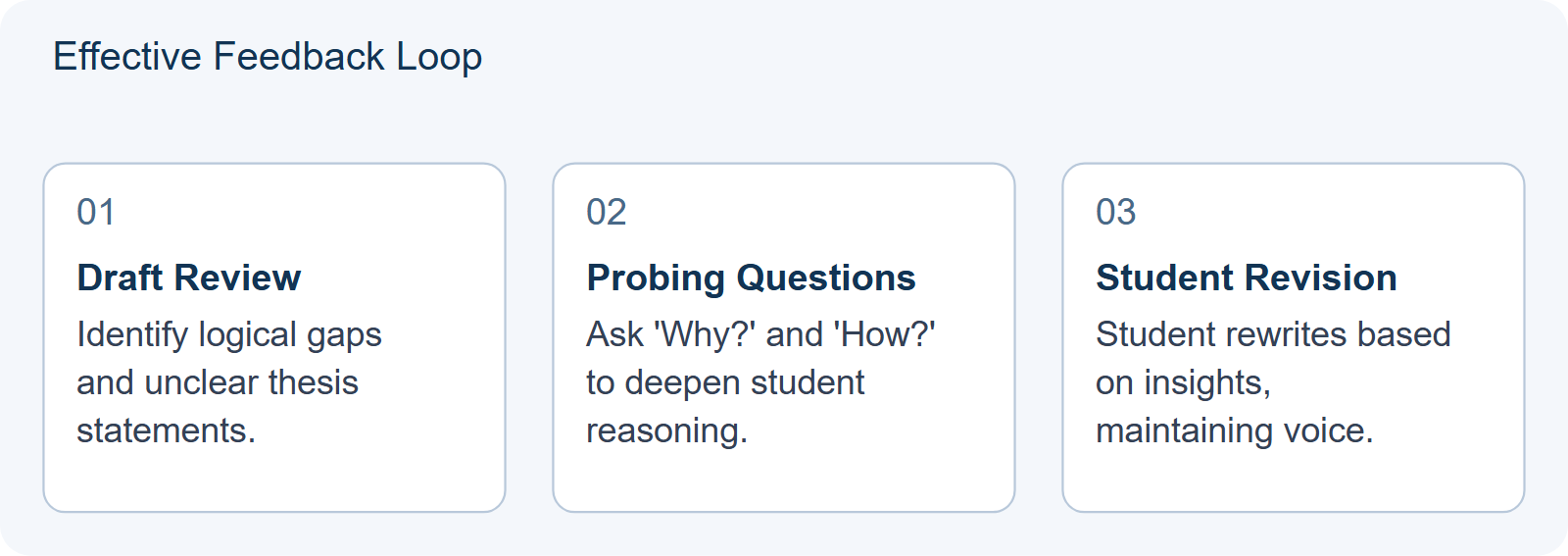
Useful feedback addresses the architecture of the argument. Students often struggle with balancing breadth and depth within the word limit. Coaches should ask:
- Thesis Clarity: Can the core argument be summarized in one sentence?
- Evidence Integration: Are examples supporting the claim or merely decorating the page? See our analysis on using Chinese thinkers as evidence for practical examples.
- Logical Flow: Does each paragraph advance the argument, or does it repeat previous points?
Feedback should identify gaps in reasoning rather than filling them. For instance, if a student argues about economic policy, the coach might ask, “What is the counter-argument to this specific point?” rather than writing the rebuttal themselves.
Preparing for the Interview Stage
Recent data shows that shortlisted candidates face rigorous verification. The 2026 cycle introduced mandatory interviews for stronger contestants. Whether via AI or live faculty, these sessions test whether the student truly understands their work. Effective coaching includes mock interviews focused on three areas:
- Motivation: Why did you choose this topic?
- Content Logic: Explain your main argument in two minutes.
- Depth: Define key concepts and provide additional examples.
Students should practice summarizing their essays in 1-minute, 3-minute, and 6-minute versions. This ensures they can adapt to different question types during the actual assessment.
Post-Competition Value
Even if a student does not win, the process yields valuable assets. A refined essay can become part of a university application portfolio. Our article on turning competition essays into application material details how to repurpose this work. Feedback should therefore consider long-term utility, ensuring the final draft is polished enough for academic use beyond the contest.
| Feedback Type | Useful Approach | Ineffective Approach |
|---|---|---|
| Argumentation | Ask probing questions to expose logical gaps. | Rewriting paragraphs to improve flow. |
| Evidence | Suggest sources for further reading; check relevance. | Inserting quotes the student hasn’t analyzed. |
| Structure | Review outline coherence; check thesis alignment. | Reordering sections without student input. |
| Interview Prep | Simulate Q&A; practice concise summaries. | Scripting exact answers to memorize. |
Hanlin provides independent coaching services and is not affiliated with or endorsed by the John Locke Institute. Our role is to equip students with the skills to present their best work authentically.
HYPOTHETICAL/ILLUSTRATIVE: The ‘Counter-Argument’ Pivot in a Political Philosophy Draft
To understand how useful feedback operates in practice, consider a hypothetical scenario involving a student drafting an essay on the legitimacy of civil disobedience. The student’s initial draft argues that breaking unjust laws is morally permissible because it exposes systemic flaws. This position is strong but potentially one-sided. A coach providing ethical preparation support would not rewrite this section to add nuance. Instead, they would identify a specific structural vulnerability: the lack of engagement with the strongest opposing view.
Imagine two plausible choices for addressing this gap. Choice A involves the coach suggesting a generic addition: “You should mention that some people think law and order are more important.” This is ineffective because it remains vague and does not force the student to refine their own logic. Choice B involves a targeted question based on the article’s advice regarding logical flow: “If a critic argues that civil disobedience inevitably leads to social chaos, what specific mechanism in your argument prevents that outcome?”
The decision changes when the student realizes that answering Choice B requires them to define their terms more precisely. They might need to distinguish between ‘chaos’ and ‘disruption,’ or clarify the conditions under which disobedience is legitimate. This process strengthens the thesis without altering the student’s voice. In contrast, if the coach had simply inserted a paragraph about Hobbes’ Leviathan, the student might struggle to explain that content during an interview, violating the principle of authentic engagement.
This example highlights the difference between filling gaps and exposing them. Useful feedback acts as a mirror, reflecting the argument’s weaknesses back to the author so they can repair them. It ensures that the final submission remains a product of the student’s intellectual labor, which is critical for both scoring integrity and interview readiness.
| Action Step | Ineffective Intervention | Useful Coaching Prompt |
|---|---|---|
| Identifying Weakness | “This paragraph feels weak; let me fix it.” | “Where does your argument assume agreement from the reader?” |
| Adding Depth | “Here is a quote from Rawls you should use.” | “How would Rawls critique your current definition of justice?” |
| Structural Check | “Move this point to the end for better flow.” | “Does this point advance the thesis or repeat the introduction?” |
Reusable Self-Check for Students
Before accepting any piece of feedback, students should ask themselves three questions to ensure the support remains within ethical boundaries. First, “Can I explain why this change improves my argument without relying on the coach’s reasoning?” If the answer is no, the intervention may have crossed into ghostwriting. Second, “Does this feedback help me articulate my own ideas more clearly, or does it replace my ideas with someone else’s?” Third, “If asked to defend this specific sentence in an interview, do I feel confident explaining its origin and purpose?” These checks empower students to filter out inappropriate assistance while embracing guidance that sharpens their analytical skills. By maintaining this discipline, candidates ensure their work reflects genuine intellectual growth rather than external polish.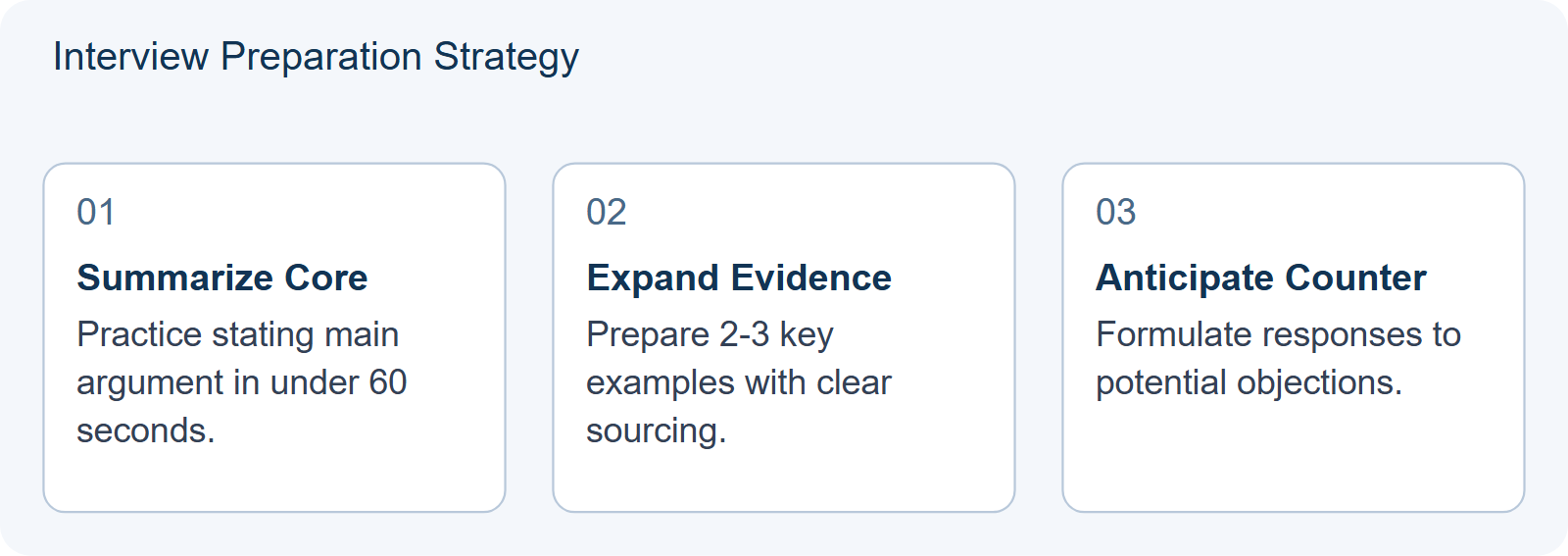
Frequently Asked Questions
Does John Locke coaching guarantee a shortlist?
No. With only 17.5% of entries shortlisted, success depends on original thought and execution. Coaching improves clarity and rigor but cannot guarantee selection.
Is the interview mandatory for all participants?
No. Interviews are invited for 'stronger contestants' after initial assessment. Participation is voluntary, though declining may impact final award consideration.
Can coaches write parts of the essay?
No. Ethical coaching involves guiding the student to write their own content. Ghostwriting violates competition rules and risks disqualification.